Showing posts with label Eternal life. Show all posts

Thursday, April 21, 2011

Beyond Death


This week both Passover and Easter are commemorated by observant Jews and Christians throughout the world. What meaning do these “Holy Days” have for contemporary people who do not share the theological beliefs of orthodox believers?


Passover is the commemoration of the liberation of the Jewish slaves from tyranny. While that sounds wonderful, the story as related in the Torah (Bible) contains implications that make this less and less of a fantastic story and bears a strong resemblance to the human reality even today. The freed slaves find themselves in the middle of a desert facing a lifetime of uncertainty and difficulties, sound familiar? I have written on this subject before, if you wish to revisit those thoughts, follow this jump.


Christian Holy Week is bookended by Palm Sunday and Easter Sunday. It is connected to the Passover, since the young Rabbi Jesus was visiting Jerusalem to observe the Passover with his disciples. There is a layering of new significance onto the older significance of the Passover.


The crowds jubilantly welcome Jesus as a Liberator/King on Palm Sunday. The popular opinion/understanding was that he would eject the Roman occupiers of Jerusalem and restore the Davidic Kingdom. Through this Kingdom and its expansion, Israel would fulfill her role in Salvation history by imposing the Covenant on the pagans (at the point of the sword).


This, was never the divine plan, according to the Prophet Isaiah (42: 43) and to Luke (2: 34), the Messiah of God would invite inner spiritual conversion and not impose external conformity. Not a crowd-pleasing plan, as the elderly priest Simeon prophesied in Luke’s Gospel, this was not the Messiah the crowds expected (or wanted). He still is not, people want the “Shell Answer Man and Julius Caesar” all rolled up in a neat package. Evil should be defined as people elsewhere, someone not like us (me). Evil should never be defined as something we each have to personally face and overcome within ourselves. That requires something of me, far too much work and highly disquieting.


In the course of the week, Jesus fails to deliver, 1) what people want, 2) how they want it, and of course, 3) on their timetable. The religious and political authorities of the day seize this golden opportunity to eliminate Jesus and maintain the status quo, along with their power, wealth and social status. The same crowds that shouted praise at Jesus on Palm Sunday shout jeers at him on Good Friday. This resonates with a truth about popular opinion; it is fickle and more often driven by emotion than by reason.


Another truth about human life revealed on Good Friday, is when Jesus is stripped of his garments. Life does that to each of us. Everything we think is essential for our life and happiness is slowly stripped away from us with the passage of years. Our youth, friends, loved ones, health, mobility, independence and in many cases our other half. We, like Jesus, are left naked and in that nakedness discover what is truly essential. What no thief or time can steal from us, the love we have generously received and given. If you doubt this, or consider it emotional hyperbole, spend a day in the local oncology ward of your closest hospital.


Then there is Easter Sunday. All the chocolate and jelly bean Easter eggs, pale in comparison to the syrupy diabetes inducing nineteenth century “spirituality” that swirls like Katrina around popular American “Easter Day” celebrations and “piety.” The shorter (original) conclusion of the Gospel of Mark [16: 1-8] ends simply with “an empty tomb.” The women leave that tomb, “bewildered and trembling; and because of their great fear, they said nothing to anyone.” What Mark suggests is not so much a “declarative” as a “question.”


That question is as valid today as it was thousands of years ago. The empty tomb suggests that death is not the end of human life. It suggests that there is something beyond death, something beyond this immediate physical existence. The work of Kubler Ross and Dr. Brian Weiss confirm this truth. If Ross & Weiss’ research and work are correct, then the question implied by Mark’s empty tomb is also raised by their research. What is the value and meaning of human (my) life?


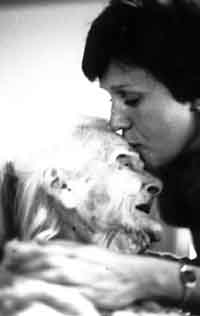
There are a vast number of proposed answers to this question, ranging from Aristotle, Plato on one end of the spectrum to Aquinas and Marx on the other end. My experience of working with people on their death beds suggest that these vast collective answers are not the primary concern of someone who is facing death. Rather, how one has interacted with other real people (spouse, friends, family) is what is most pressing at that moment. If what near death experiences suggest is accurate, then how we chose to live our lives is what is of paramount importance.


Specifically, you are the product of your deeds and words. These, be they conscious or unconscious choices, shape who we become. I believe that the “acid test” of the worth of our life is, “Have I done what I honestly believed was right in my life?” and “How have I expanded love in the world?”


Passover suggests that freedom is the beginning of a life long journey, from enslavement towards fulfillment. Easter suggests that death is not the end of our being, but simply a completion and transition. How we use our freedom determines who we are today and the peace/happiness (or lack thereof) both now and at the completion of/transition from/ this life.

Friday, April 15, 2011

Post Script: Life, Spirituality and Religion


Further thoughts on "Delivery Salvation" and "Life, Spirituality and Religion."


The parable of the Good Samaritan in Luke suggests a paradox that we instinctively knew as small children. It is when I decide, motivated by selfless love of another, to generously move beyond myself that I am most fully alive. It is in that very act, when I lift up and help someone else that I myself am lifted up and helped.


Each of us, on this life’s journey, has encountered luminous and loving people (e.g. a parent, a true friend, teacher, professor, supervisor, co-worker, etc) who have shown us mercy, extended us patience, kindness and love. Each of us has been that broken wounded person on the road who was helped by another. Implied in that story is, of course, the mugger who, motivated by selfish desires, visited evil upon the person and left their victim to die alone on the road. Each of us can become either the Good Samaritan or the unnamed mugger. Truthfully, each of us has been both at different moments in this life’s journey. The question in life is who do I wish to become. My words and actions NOW determine who I am; they are the hammer and chisel that sculpt me. Eleanor Roosevelt said, "Beautiful young people are accidents of nature, but beautiful old people are works of art."


My choices have both personal and collective resonance. Whom I chose to be affects both me and everyone I encounter today. My words and actions have a ripple effect on me and other individuals and on society that I will probably never fully appreciate in this life. The parable of the Good Samaritan underscores the trans-formative personal and collective power of human decisions to be indifferent/removed (safe) and to choose to love (and become vulnerable).


The spiritual crisis in contemporary life stems from the false belief that meaning/happiness is externally conferred upon me and the fear of being abused by others. The counter-intuitive truth is that meaning/happiness are like water; the only way to hold it is with open hands. Clenched fists create the illusion of invulnerability; however, the cost is isolation. Clenched fists will leave others bruised and will leave me to die of thirst.


In the passage from the Gospel of Luke, the initial question asked by the lawyer is, “Rabbi, what must I do to inherit everlasting life?” In the rabbinic tradition, life answers with another question, “What have you done to expand love in this world?”

Wednesday, April 13, 2011

Delivery "Salvation."


We live in a marvelous time, not only can one get Chinese and Pizza delivered to one’s door, but you can also get delivery “Salvation.” The doorbell rang early this afternoon and, of course, the dogs went berserk. Fortunately, the front door has a glass door that opens permitting me to speak to people without the dogs leaping up all over them.


Two young men stood at the door and my first thought was that they were collecting for their college fund. I have had a few young people come by for that express purpose. They politely greeted me and asked if I would not mind answering a few survey questions regarding religion. “Sure” I said, relieved that they were not asking for money since that is in short supply these days.


“Are you Jewish?” the spokesperson of the two young men asked. “No” I answered, at first I thought this question odd; however, I quickly recalled that many of my neighbors are Jewish.


“At death, there are two possibilities heaven or hell and only Jesus can save you from hell.” I now appreciated why they had asked if I was Jewish. “That is an interesting take on God,” I said. “In the sixteenth century Teresa of Avila wrote, ‘If there was no reward of heaven, I would still serve thee and if there was no pain of hell, I would still fear thee. The hope of reward or the fear of punishment denotes an immature relationship, at best. Just apply that to any other relationship in life, e.g. friendship, family, or romantic relationship. How would you feel if someone close to you viewed your relationship in terms of obtaining a reward or fearing retribution? That attitude itself would constitute an offense and serve to undermine the relationship.


The two young men were processing all of this and I decided to illustrate what God wanted from us, and so I cited from the Gospel of Luke.


Jesus was asked about the afterlife in the Luke 10: 23-37. “Rabbi, what must I do to inherit everlasting life?” The question, by a lawyer, was prompted because there were 614 laws that an observant Jewish person was expected to keep. To break one law, was to break them all. In the rabbinic tradition of questioning/discussion this question was posited, “What does God expect of me?” “What is essential, or central?”
This question is applicable to contemporary people as well, regardless of one’s religion (or lack thereof), “What must I do to achieve my full potential, to be truly whole and at peace?”


In the rabbinic tradition, Jesus answers the lawyer’s question with two other questions. “What is written in the law [Torah/Bible]?” In addition, “How do you read it?” Incidentally, that second question is of critical importance, because our motive in reading any spiritual text, will determine its spiritual value/harm in our life.
The lawyer responded by citing a passage from Deuteronomy 6: 4-5 “Hear, Oh Israel!” that is prayed by observant Jewish people to this day, as Christians pray the “Our Father.” And Leviticus 19: 18, “love your neighbor as yourself.” Jesus approves the lawyer’s quotes and says, “You have answered correctly. Do this and you shall live.”
Luke notes that the lawyer, “because he wished to justify himself” asked, “and who is my neighbor?” Jesus then tells the story of the Good Samaritan.


Interestingly, Samaritans were regard as being beyond any hope of eternal life since; they had comingled Judaism with pagan beliefs and practices. Their theological beliefs and religious practices were seen as flawed, heretical and impious. Jesus deliberately selects a suspect minority group who were believed beyond hope of eternal life to illustrate what God expects from us. I suppose that if Jesus told this parable in the USA today, it would be the story of the Good Faggot.


The Samaritan is “good” not because of what he believes, but because of how he treats others. He encounters a man who was mugged and left to die, unlike his “pious” contemporaries; the Samaritan compassionately tends the victim’s wounds and provides for his practical needs. To underscore the importance of practical love, Jesus concludes by directing the lawyer, “Go and do the same.” In essence, this is what God wants, bottom line, from each person.


God does not demand that we learn a dozen dead languages, obtain a doctorate degree in dogmatic, or moral theology. God does not expect that we follow a set of laws with unerring precision. God does expect that our relationships (with God, others and self) have as their hallmark practical love.


The two young men at my door thanked me politely, even though I could sense that they did not appreciate what I had said. I smiled as they walked on to the next-door and recalled a time in my youth when I, like they, had all the answers. The answer is not as important as the question. “What must I do?” Not what must I believe and how many people can I manage to impose my beliefs on.